Ten ways walkers, joggers and runners can prepare for a successful 5K
- Category: General, Cardiology, Foundation
- Posted On:
- Written By: Boulder Community Health
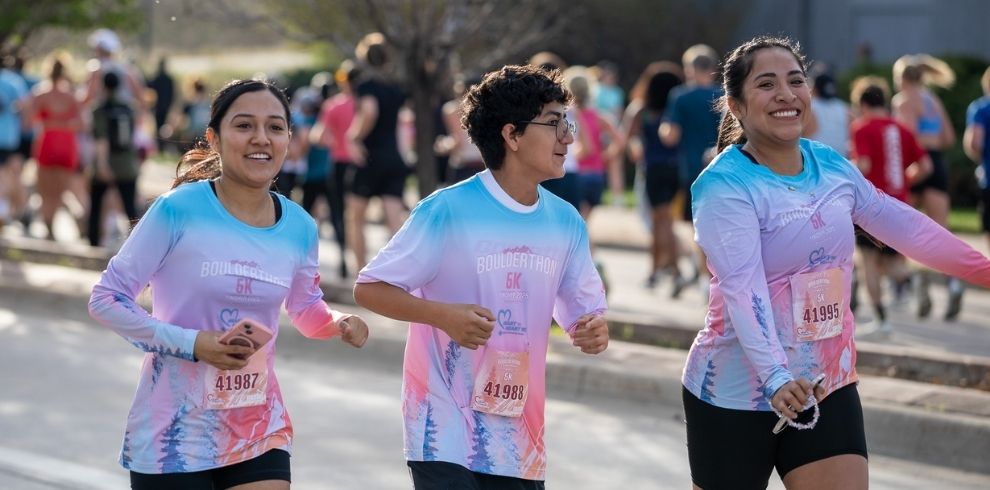
Boulder Community Health’s (BCH) Heart to Heart 5K came to life for a heart-warming reason—to help spread the word about cardiovascular health and the importance of accessible, quality cardiac care in Boulder County.
In the United States, someone dies of cardiovascular disease (CVD) every 34 seconds—that’s nearly 2,500 people every day. These mothers, fathers, sisters, brothers and friends are all gone because of a disease that is usually preventable (Source: Centers for Disease Control and Prevention).
Even though heart disease has been the #1 killer for more than a century, many are not aware. Fueled by ongoing increases in high blood pressure, obesity and other major risk factors, heart disease continues to kill more people in the United States than any other cause, according to the American Heart Association’s 2026 Heart Disease and Stroke Statistics Update.
The experienced cardiology team at Boulder Heart, BCH and the BCH Foundation have partnered again with Boulderthon to host the 3rd Annual Heart to Heart 5K, taking place Sunday, Sept. 27 in Downtown Boulder. Donations made during registration directly support the Heart to Heart Fund, a patient assistance program that helps cardiac patients manage the financial burdens of ongoing cardiovascular treatment. This year’s event will bring together 2,500 runners, joggers and walkers for one of the top 5K race experiences in the country, all for a remarkable cause.
Why train for a 5K?
At 3.1 miles, the 5K is often referred to as the most accessible racing distance. It’s a great choice for walkers, joggers, and advanced and beginner runners – of all ages and abilities. The Heart to Heart 5K also welcomes wheelchair athletes and strollers for an inclusive opportunity.
Whether your goal is to walk your first 5K, return to running after time away, set a personal record or simply spend a healthy morning with friends and family, training for a 5K gives you a tangible goal to work toward. Even modest increases in physical activity can improve heart health, boost energy, reduce stress and build confidence. With the right preparation, you might be surprised what you can accomplish.
You’ve taken the leap and registered for the 5K at boulderthon.org/5k. What’s next?
Your guide to preparing for your first (or fastest) 5K
- Find the right shoes for your feet.
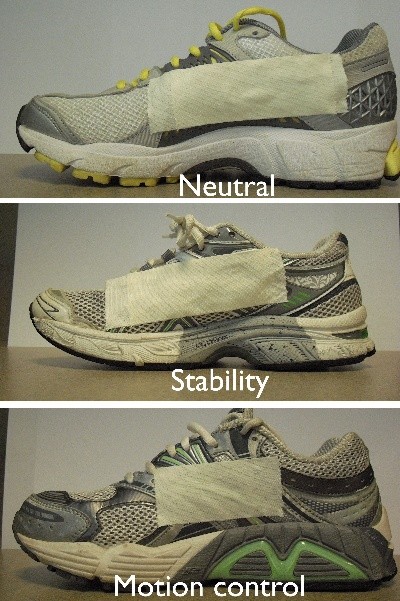 Surgeons from the American Orthopaedic Foot and Ankle Society (AOFAS) recommend matching your shoe to your foot shape and strike pattern.
According to AOFAS, running shoes are grouped into three categories:
- Cushioned or "neutral" shoes are designed for runners with high arched, rigid feet. A runner with this type of foot is classified as a "supinator."
- Stability shoes provide light to moderate stability for individuals with an arch that may collapse while running. This type of runner, classified as a "pronator," needs to maintain their arch while running.
- Motion control shoes are designed for runners who are "severe pronators." This type of shoe provides the most stability and is the choice for runners with flat feet and those with a heavier body weight.
The best way to determine if you are a supi
nator or pronator is to have a professional evaluate your feet at a running store. To determine your foot type on your own, view your footprint when you step out of the pool or shower. If you leave a wide, flat footprint, you may have a pronated foot. If the footprint is missing the inside of the foot, where your arch did not touch the ground, you may have a supinated foot type.
Since feet swell throughout the day, try new shoes at the end of the day or after a workout. Wear the same type of sock that you typically wear when you are running or walking.
- Use walk/run intervals and follow a structured plan.
The hardest part is getting started. If you’re a beginner runner, start out with the walking/running approach to build endurance up to the consecutive 5K distance. You will gradually decrease your walking as your fitness improves.
“Regular exercise and keeping your heart rate elevated can build cardiovascular strength and allow you to do more over the long term,” says Boulder Heart structural interventional cardiologist Chirag Chauhan, MD, who recommends 30 minutes of cardio exercise three to five days a week. “It also helps puts your heart at lower stress levels when you're doing the exercise more regularly.”
As Boulderthon’s Official 2026 Training Partner, Runna offers 5K training plans perfect for beginners or those returning to running, with gradual progression to build confidence and consistency. Use code BOULDERTHONRUNNA for two weeks free. With Runna, Strava’s Run-Coaching App, you’ll receive weekly breakdowns, a personalized plan tailored to you and your goals, seamless integration with your smartwatch, and much more.
How long you’ll need to prepare for your 5K depends on a variety of factors, including your baseline fitness level, and whether you’ve been sidelined by injury or are coming back after having children.
- Monitor the air quality via the Air Quality Index (AQI).
Air Quality Index (AQI) is a measure of the amount of PM2.5 in the air—small particles emitted from industrial pollution and wildfire smoke known to be the most hazardous for health. This number can be found on any smartphone weather app, or air quality monitoring websites like AirNow or IQAir.
Worsening air quality from wildfire smoke, industrial and auto pollution is particularly hard on people who have heart or lung problems.
When air quality is bad, staying inside and limiting physical activity is advised. Wearing an N95 or KN95 mask to help filter out fine and ultrafine smoke particles when outside can help.
When the Air Quality Index (AQI) exceeds 100, move workouts indoors or limit your exertion. Substitute outdoor sessions with treadmill running, cross-train on a stationary bike, or swap hard intervals for indoor strength, core, and mobility work.
To learn more about the science behind poor air quality and how to stay healthy in the haze, click here.
- Stay hydrated and consider electrolytes.
Staying well-hydrated is good for your heart. Experts from the American Heart Association (AHA) recommend, in general, about 15 and a half cups (or 3.7 liters) of fluids per day for men, and about 11 and a half cups (or 2.7 liters) of fluids per day for women. Note, that’s cups, not glasses. Drinking glasses and water bottles often hold more than one 8 oz. cup.
Colorado’s altitude, low humidity and dry climate are three reasons whybaseline hydration needs in the Mile High State are generally greater than sea-level recommendations. You may be drinking enough water if: you don’t often feel thirsty, and your urine is colorless or light yellow.
This means staying on top of hydration needs—prior to exercising.
“Hydration plays a huge role in heart health in general,” says Dr. Chauhan. “Staying hydrated lowers your baseline heart rate, which can allow you to do more physical activity and allow you to have less symptoms, such as lightheadedness and dizziness when you're exerting yourself.”
Dr. Chauhan is also a fan of electrolytes, which are essential minerals that the body needs to facilitate muscle contraction and relaxation, as well as maintain heart rate and rhythm. Some key electrolytes include sodium, potassium, calcium and magnesium. Typically, most people can get enough electrolytes through their regular diet.
Since 2020, electrolyte products, such as drinks, powders, drops and tablets, have been growing in popularity. Some popular electrolyte packets can contain over 500 or 1000 milligrams of sodium. Currently, the American Heart Association recommends most adults get no more than 1,500 milligrams of sodium a day, an amount that many people already surpass due to added salt in prepared and processed foods.
Dr. Chauhan says to keep track of your sodium intake when consuming electrolytes, since too much sodium can raise your blood pressure. For his patients with high blood pressure, Dr. Chauhan says they should reach for low sodium/no sodium electrolyte powders and tablets.
- Reduce UV damage.
Even on cooler days or when it’s cloudy, ultraviolet (UV) radiation can still reach your skin. Because of high elevation, Colorado residents and visitors are closer to the sun and exposed to stronger UV rays throughout the year than people at sea level.
To reduce UV damage and feel your best,
- Use sunscreen—generously and consistently. Look for a broad-spectrum sunscreen with at least SPF 30, which guards against both UVA (aging) and UVB (burning) rays.
- Think through your clothing choices. Long sleeves, pants, wide-brimmed hats, items with a UV Protection Factor (UPF)—all in darker colors—are the most protective options.
- Wear UV protective sunglasses. Look for wraparound styles that block 99% to 100% of UVA and UVB rays.
- Seek shade. The sun’s UV rays are strongest between 10 a.m. and 4 p.m.—and the best timeframe to find covered spots.
If you’re training while pushing little ones in a running stroller, remember that children’s skin burns faster and more easily than adult skin.
Learn more tips on how to stay sun-smart here.
- Expand your exercise plan to include strength training.
According to Boulder Heart cardiologist Molly Ware, “Cardio is important, but strength training is mandatory.”
The American Heart Association agrees, recommending moderate to high-intensity muscle-strengthening activity at least two days per week. The best exercises to protect and strengthen your knees for running are squats, split squats and step-ups. These movements build the quadriceps, glutes and stabilizing muscles around the joint to absorb impact.
“I recommend that people start with simple (weight-bearing) at home exercises like pushups, sit ups and squats,” says Dr. Ware. “There are also plenty of online videos for at home exercises (lunges and dips for instance).”
Find exercises you enjoy by using free weights, machines, or your body’s own resistance. Don’t forget rest days and to warm up and cool down before and after each lifting session.
If you’re new to lifting weights, Dr. Ware recommends attending a series of weightlifting classes at a local recreation center.
“CrossFit Roots (just east of Foothills Hospital) has an excellent all-around strength program for people over 60 years of age,” says Dr. Ware.
While strength training may seem intimidating, Dr. Ware advises that strength is for everyone of all ages. “Just start,” she says.
- Prioritize sleep and get the recommended seven to nine hours.
Getting a good night’s sleep every night is vital to cardiovascular health and heart health, since the hours spent sleeping are the only period the heart gets to rest. Adults should aim for an average of 7-9 hours.
“When you go to sleep, your heart rate drops, your oxygen level stays up, your blood pressure drops, so it’s kind of a cleansing for your whole body,” says Boulder Heart cardiologist Jon Schutz, MD. “With good sleep, you also diminish inflammation.”
Learn why getting good sleep is about more than just shut eye in this short video.
- Consider wearable technology.
Wearable technology has transformed how we monitor and manage personal health. For those focused on heart health, these devices now offer more than fitness tracking—they are tools for early detection, chronic disease management and cardiovascular recovery.
Activity trackers can track your steps and how long you sit vs. stand, monitor your sleep score and encourage more movement. Smart device data can also be used by cardiologists to help monitor possible heart rhythm issues like atrial fibrillation, changes in heart rate, changes in sleep score and changes in oxygen saturation.
“Wearable devices can help show how much activity people are actually getting,” says Boulder Heart interventional cardiologist Robert Shapiro, MD. “That insight matters—especially when paired with health goals. “VO2 max improving can be a clear sign that heart health is improving,” he added, referring to the maximum rate at which the body can use oxygen during exercise, a strong marker of cardiovascular fitness.
Learn more about wearable devices here.
- Don’t ignore injuries.
Not every ache or pain needs emergency care, but some injuries shouldn’t be ignored. Chelsea Holt, PT, DPT of BCH’s CU Sports Medicine & Performance Center says that it’s best to see a physical therapist for a running injury after one to two weeks of consistent pain, swelling, weakness or limited mobility.
“If you’re feeling the same consistent thing run after run, definitely come see someone,” says Holt. “If you feel something in the beginning of your run and it gets worse as you run, that’s usually a little bit of a red flag.”
Rest and recovery are critical for runners to get stronger. Schedule easy days between harder workouts, stretch after exercise, refuel with protein and carbohydrates, and listen to your body if something doesn't feel right.
- Find your (running) community.
There is always a run club for every ability and level—especially in the Boulder area. Boulderthon has a list of favorite groups to run with for meeting new friends. Check it out here.
Fleet Feet Boulder offers weekly group runs, and they host shoe and gear demos, themed runs and special events. All paces welcome.
The Schedule: Fleet Feet Boulder. Visit their website here!
- Tuesdays at 7am at the People's Crossing Trailhead (May-September)
- Thursdays at 6pm at Fleet Feet Boulder
Join BCH and Boulderthon on Saturday, Aug. 29 for the 5K/10K Course Preview.
Heart to Heart 5K Course Preview
Saturday, Aug. 29 • 8 a.m.
Fleet Feet Boulder (Boulder Running Company)
2775 Pearl St.
Enjoy a two-mile course preview. Pacers will be provided by Lululemon, dedicated for each minute per mile pace group from 8 min/mile to 13 min/mile. The BCH team will be on hand for all your 5K questions, with plenty of freebies, along with Boulderthon partners.
See you at the starting line
Whether you're walking your first 5K, jogging with friends or chasing a new personal best, we are grateful for each race participant and the dedication to support a healthier community while investing in heart health. Lace up your shoes, follow your training plan and join us on Sept. 27 for the Heart to Heart 5K.