Endoscopic nipple-sparing mastectomy now available at BCH
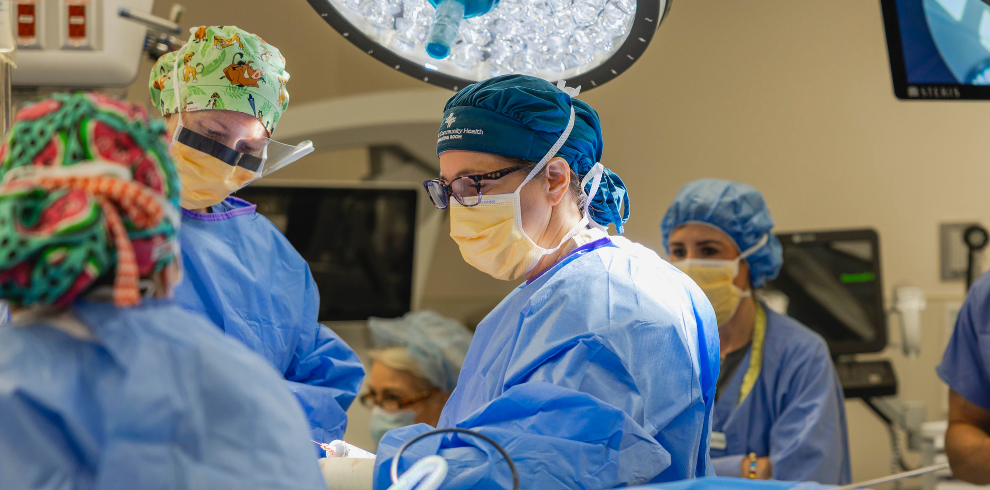
Susan Hagen, MD, FACS performs first E-NSM procedures in Colorado at Foothills Hospital
Boulder Community Health (BCH) is now offering endoscopic nipple-sparing mastectomy (E-NSM), a new minimally invasive approach for the treatment and prevention of breast cancer, at Foothills Hospital. Susan Hagen, MD, FACS of BCH’s Boulder Valley Surgical Associates (BVSA) recently performed the first E-NSM procedures in Colorado, successfully treating three women during the week of Aug. 24–28, 2026.
E-NSM is an alternative approach to conventional open nipple-sparing mastectomy that uses a small, discreet incision beside the breast. Research suggests the endoscopic approach may offer benefits including improved cosmetic outcomes, less postoperative pain, potential reduction in complications, and higher patient satisfaction and well-being.¹
Dr. Hagen has completed specialized training in this innovative approach to breast surgery and has more than 15 years of experience performing breast cancer surgery.
“As a surgeon, I am continually seeking opportunities and training to offer the most advanced techniques to my patients,” says Dr. Hagen. “E-NSM offers patients a better dissection and cosmetic outcome and appearance of the breast. I’m thrilled to continue to see surgical advances in the treatment of breast cancer.”
A minimally invasive approach
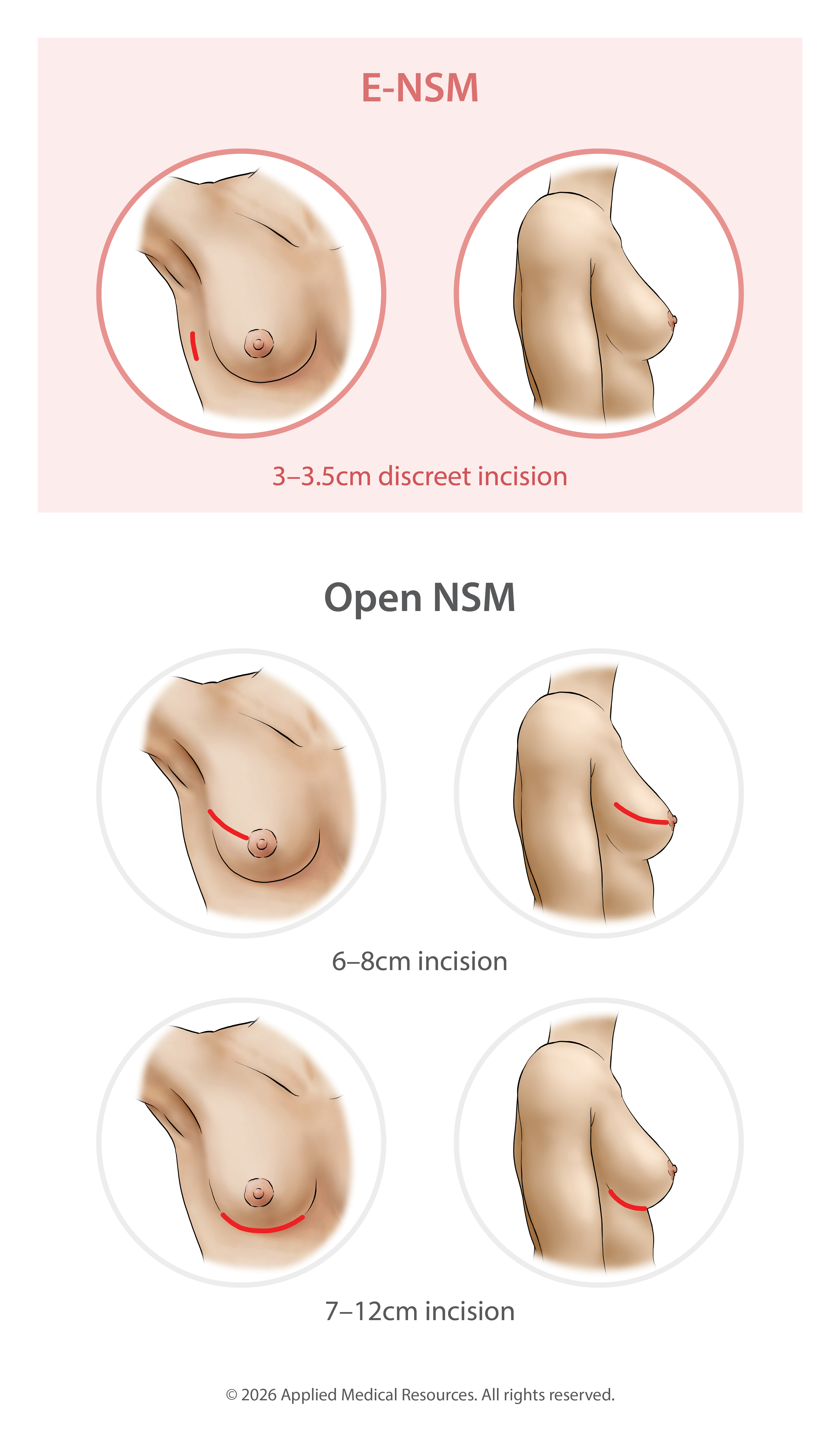 The E-NSM technique uses a small, approximately 3–3.5 cm incision beside the breast. A GelPOINT® Mini advanced access platform is placed through the incision, allowing a high-definition camera and specialized instruments to access the breast tissue endoscopically.
The camera provides high-definition visualization while specialized surgeon-held instruments allow the surgeon to operate with precision through the small incision. The breast tissue is removed through the incision, followed by immediate breast reconstruction when appropriate and the patient is eligible.
By using a discreet incision rather than a more prominent incision on the breast, E-NSM is designed to prioritize both effective cancer surgery and aesthetic outcomes.
Treatment and prevention of breast cancer
Breast cancer is the most commonly diagnosed cancer among women in the United States, with approximately one in eight women developing breast cancer during their lifetime.²
In addition to its use in treating breast cancer, E-NSM may be used as a preventive, or risk-reducing, procedure for patients with BRCA1, BRCA2 or other genetic mutations associated with increased breast cancer risk, those with a family history of breast cancer, or patients undergoing contralateral mastectomy.
On average, women with a BRCA1 mutation have up to a 72% lifetime risk of developing breast cancer, while women with a BRCA2 mutation have up to a 69% lifetime risk.
About Susan Hagen, MD, FACS
_edit.jpg) Susan Hagen, MD, FACS, is Director of Surgical Services at Boulder Community Health and a surgeon with Boulder Valley Surgical Associates. She has dedicated her career to general surgery, with a focus on advanced surgical techniques and a special interest in oncologic procedures, including the surgical treatment of breast cancer. Her other areas of interest include wound care, endocrine surgery for thyroid and parathyroid conditions, and trauma surgery. For many procedures, she uses da Vinci Xi robotic-assisted surgery, which can provide benefits such as smaller incisions, decreased pain medication requirements and quicker recovery. To date, she has performed more than 700 robotic cases.
Susan Hagen, MD, FACS, is Director of Surgical Services at Boulder Community Health and a surgeon with Boulder Valley Surgical Associates. She has dedicated her career to general surgery, with a focus on advanced surgical techniques and a special interest in oncologic procedures, including the surgical treatment of breast cancer. Her other areas of interest include wound care, endocrine surgery for thyroid and parathyroid conditions, and trauma surgery. For many procedures, she uses da Vinci Xi robotic-assisted surgery, which can provide benefits such as smaller incisions, decreased pain medication requirements and quicker recovery. To date, she has performed more than 700 robotic cases.
Dr. Hagen is also a peer-reviewed author and the co-host of The Next Breast Thing, the official podcast of the American Society of Breast Surgeons (ASBrS).
“Taking care of patients is a true gift,” says Dr. Hagen. “It is amazing to me on a daily basis that someone will come into my office and put so much trust in me and my skills, that I will make them better.”
References
- Carroll A, Robles C, Lai HW, et al. Oncological, surgical, and cosmetic outcomes of endoscopic versus conventional nipple-sparing mastectomy: meta-analysis. BJS Open. 2025;9(3):zraf011. doi:10.1093/bjsopen/zraf011. This review was funded by Applied Medical. No author has received any specific compensation for their work.
- American Cancer Society. Cancer Facts & Figures 2025. Atlanta: American Cancer Society;2025.