Vaccine myths and facts: Protect yourself and your loved ones
- Category: General, Infectious Diseases, Primary Care
- Posted On:
- Written By: Boulder Community Health

Vaccines are among the safest and most effective tools we have to prevent serious illness. They don’t just protect you — they help keep dangerous diseases from spreading to the people you see every day in classrooms, childcare centers, workplaces and recreation centers. They provide indirect protection to people who are too young to receive vaccine or are immune compromised.
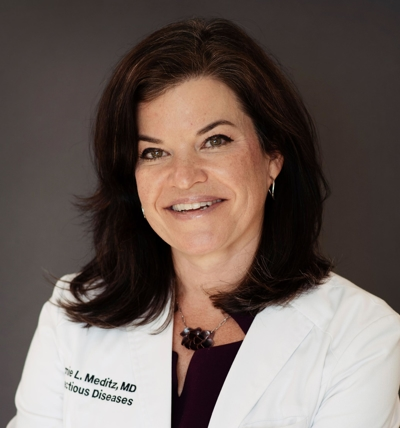 “Vaccines are a critical tool to limiting illness and hospitalizations and prevent millions of deaths a year,” says Amie Meditz, MD, infectious disease physician at BCH’s Beacon Center for Infectious Diseases. “Vaccines create a readymade immune army so that your immune system recognizes and responds quickly when your body is exposed to the microorganism.”
Between 1994 and 2023, routine childhood vaccinations in the United States have prevented approximately 1.13 million deaths, 32 million hospitalizations, and 508 million cases of illness. These efforts have resulted in direct medical cost savings of $540 billion and societal savings of $2.7 trillion (Source).
Still, there’s a lot of misinformation about vaccines. Our local BCH experts help dispel some common myths so you can make informed decisions.
Myth: Vaccines cause autism
Fact: They don’t. This myth began with a single deceptive 1998 study that falsely linked the measles, mumps and rubella (MMR) vaccine to autism. The research was proven fraudulent, the author lost his medical license, and the paper was retracted. Since the early 2000s, multiple primary articles including large scale epidemiologic studies and meta-analysis have consistently found no association between receipt of vaccines and autism.
Myth: Vaccines contain dangerous toxins
Fact: Ingredients in vaccines are safe. A tiny amount of aluminum, for example, makes vaccines more effective and is also found naturally in food, water and air. Recent study shows no association between the use of aluminum in vaccines and chronic disease in children. Thimerosal, a mercury-based preservative used in some multi-dose vials, isn’t used very often in the US, but it is important to understand that there’s no evidence that it is harmful as multidose vials are important to vaccine distribution worldwide. Formaldehyde is used in vaccines to prevent contamination, the amount in vaccines is less than 1% of the amount your body naturally produces and is rapidly cleared by the body.
While many of these ingredients may be unfamiliar in our every day lives, intensive research has shown the safety and effectiveness of these carefully crafted vaccines that prevent millions of deaths each year.
Myth: It’s better to get the disease and build natural immunity
Fact: Vaccines give you protection without the complications of getting sick. One example is measles, actual infection carries a risk of brain inflammation, hospitalization for pneumonia and kills about one in 1,000 people. In addition, infection with measles suppresses your immune system for one to two years after infection putting people at risk for secondary bacterial infections (Source). Two doses of the MMR vaccination are safe (serious reaction rates average one in every million doses) and gives lifelong immunity to measles.
“Immunity from vaccines is similar to natural infection without the risk of complications from the disease itself,” says Dr. Meditz.
You get the protection without the hospital stay — or worse.
Read more from BCH about measles here.
Myth: Vaccines aren’t worth the risk
Fact: Vaccines have been safely used for decades. Severe allergic reactions are extremely rare — about one to two cases per million doses — and deaths from those reactions are so rare they can’t even be calculated. The benefits of vaccination far outweigh the risks.
Myth: Vaccines can give you the illness they’re meant to prevent
Fact: Most vaccines contain only dead parts of the pathogen, so they cannot cause the illness. A few use a very weak form of the pathogen, which might cause mild symptoms in rare cases, but never the full disease. Occasionally, the type of vaccines that contain the weak form of the pathogen should be avoided if you have severe immune compromise, talk to your doctor. Any mild symptoms after a vaccine are simply signs your immune system is learning to fight the illness.
Myth: Kids’ immune systems can’t handle so many shots
Fact: Children’s immune systems deal with thousands of germs every day. The small number of antigens in vaccines is nothing compared to what kids naturally encounter. Vaccines are given early because that’s when children are most at risk for serious illness. Getting multiple vaccines in one visit means fewer trips to the doctor and less stress for the child.
The recommended vaccine schedule is designed to protect children when they’re most vulnerable. In Colorado, most schools and childcare facilities require children to be up to date to attend.
This schedule protects against illnesses like measles, mumps, rubella, polio, chickenpox, hepatitis B, rotavirus, whooping cough and more. Staying on schedule helps prevent outbreaks and keeps children healthy and in school.
If your child falls behind, your family doctor or pediatrician can help create a catch-up plan. Even mild illnesses like a cold or earache usually don’t require delaying vaccines.
Myth: We don’t need vaccines anymore because these diseases are rare
Fact: These diseases are rare because of vaccines. Measles, polio and other illnesses have been eliminated in the U.S., but they still exist elsewhere. With travel and global movement, one case can spark an outbreak if vaccination rates drop. High vaccine coverage — over 95% for measles for example — keeps communities safe from outbreaks. The current estimated rate of coverage for Boulder County in 2025 is 88% which translates to a risk of outbreak of 51-61%.
Vaccines save lives
Vaccines protect you, your family, your friends and your neighbors. Our goal at BCH is to partner to create the healthiest community in the nation and vaccines are an important part of this goal.
We’re here to answer your questions and help you feel confident about your vaccination decisions. Talk with your primary care provider or pediatrician about your vaccine schedule and make sure everyone is up to date.
Resources
American Academy of Pediatrics – Childhood Immunizations: https://www.aap.org/en/patient-care/immunizations/
American College of Obstetricians and Gynecology – Vaccines During Pregnancy: https://www.acog.org/womens-health/infographics/vaccines-during-pregnancy
Boulder County Public Health – Immunizations: https://bouldercounty.gov/families/pregnancy/immunizations/
CDC – Child and Adolescent Immunization Schedule by Age: https://www.cdc.gov/vaccines/hcp/imz-schedules/child-adolescent-age.html
Colorado Department of Public Health & Environment – Immunization Information: https://cdphe.colorado.gov/immunization
Mayo Clinic – Vaccine Guidance: https://www.mayoclinic.org/diseases-conditions/infectious-diseases/in-depth/vaccine-guidance/art-20536857
World Health Organization – Vaccines and Immunization: https://www.who.int/health-topics/vaccines-and-immunization