Early detection can be your best bet at fighting breast cancer. Our breast
health services feature the most advanced technology in mammography and
breast imaging to help detect abnormalities long before you or your doctor
could notice them. In fact, all of BCH’s mammography locations have
received the prestigious designation of being a
Breast Imaging Center of Excellence by the American College of Radiology.
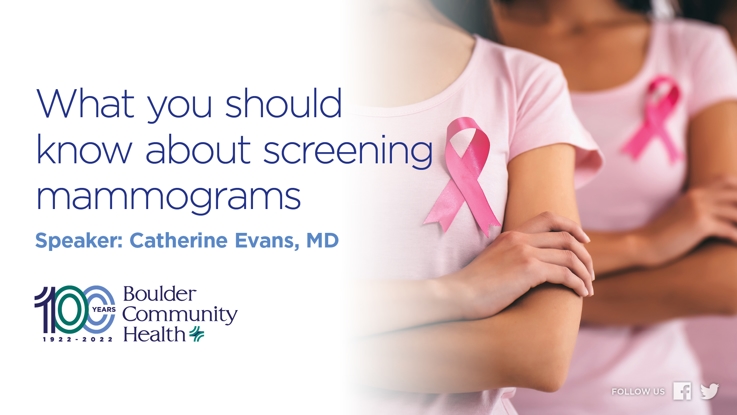
Staying on top of your screening mammograms is key to detecting breast
cancer at its earliest stages. We offer:
Digital mammography: Creates incredibly accurate and vivid images of breast tissue. Compared
to traditional film-based mammography, digital mammography uses less radiation
and allows our radiologists to manipulate high-resolution digital images
so abnormalities can more easily be seen.
3D mammography (tomosynthesis): This is a newer type of imaging technology that creates a highly detailed,
3D composite picture of the breast, allowing radiologists to view several
layers of breast tissue from various angles. This type of mammogram makes
it easier to detect small cancer tumors in moderately dense or very dense
breast tissue. It’s also beneficial for patients with an increased
risk for or personal history of breast cancer.
Screening Recommendations
Most women should have annual screening mammograms beginning at age 40,
according to current American College of Radiology (ACR) and the Society
of Breast Imaging (SBI) guidelines. Doctors may recommend starting mammograms
before age 40 if you have a strong family history of breast cancer.
BCH recommends that women have regular screening mammograms annually starting
at age 40, along with monthly self-examinations and annual physical checkups
that include a clinical breast exam. Three-quarters of women diagnosed
with breast cancer do not have a family history and are not considered
high risk.
Age 40 to 74: Start screening with mammogram annually.
Age 75 and Over: Speak with your doctor about whether you should continue with mammograms.
What’s New? American College of Radiology and the Society of Breast Imaging now recommend
that ALL women should be evaluated for breast cancer risk no later than
age 30. Have your physician review your personal and family history and
complete a risk assessment.
If you are considered high risk for breast cancer Women who are high risk for breast cancer should get a breast MRI and a
mammogram annually, typically starting 10 years prior to earliest breast
cancer diagnosis in the family. Factors that make you high risk for breast
cancer include:
A lifetime risk of breast cancer of about 20% or greater, according to
risk assessment tools that are based mainly on family history
A known BRCA1 or BRCA2 gene mutation or other genetic predisposition for
breast cancer
A first-degree relative (parent, brother, sister, or child) with BRCA1
or BRCA2 gene mutation, but only if you have not already had any genetic testing
Previous radiation therapy to the chest when you were between the age of
10 and 30 years
Work with your health care provider to calculate your lifetime breast cancer
risk using a risk assessment tool such as the
Gail Model or Tyrer-Cuzick Model.
Schedule a Mammography Appointment
For your convenience, BCH offers both screening and diagnostic breast imaging
at three locations:


obgyn.jpg)