Colorectal cancer: The preventable killer lecture recap with Tamas Otrok, MD
- Category: Cancer, General, Gastroenterology
- Posted On:
- Written By: Boulder Community Health
Colorectal cancer is one of the most common cancers in the United States, but it also is one of the most preventable.
Through regular screening and healthy lifestyle choices, many cases of colorectal cancer can be detected early or prevented entirely. Despite that, about 150,000 people in the US are diagnosed with colorectal cancer each year, and approximately 50,000 die from the disease annually.
At a recent BCH free online health lecture, gastroenterologist Tamas Otrok, MD, of Gastroenterology of the Rockies shared what everyone should know about colorectal cancer risk, prevention and screening.
Dr. Otrok stressed that colorectal cancer is unique among many cancers. “Colon cancer is very common, often lethal,” he said, “but it is unique in a sense that unlike many other cancers, it is preventable to a very large degree with proper screening.”
How colon cancer develops and why timing matters
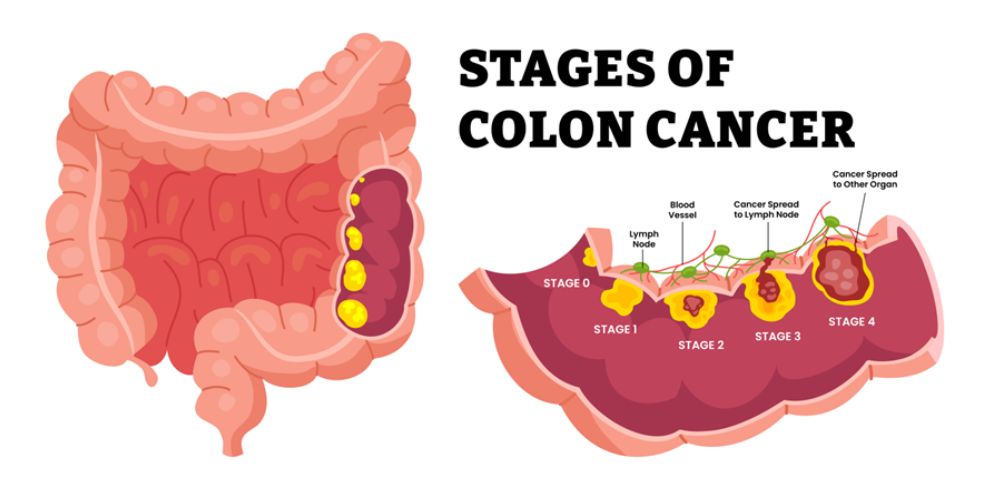
Colorectal cancer develops in the colon or rectum and often begins as small growths called polyps. Over time, some polyps can become cancerous. This process happens slowly over many years.
“Almost all colon cancers start out as a small lesion,” Dr. Otrok said. “Over time, they turn from normal tissue to cancer. So, there is a long time where we can intervene and prevent colon cancer.”
Colorectal cancer is highly treatable when detected early. Five-year survival rates can be as high as 80 to 95 percent when cancer is caught early but drop significantly when the cancer spreads to other parts of the body.
Symptoms to watch for
Early colorectal cancer may not cause noticeable symptoms, which is why timely screening is so important. However, certain signs should prompt swift medical evaluation, including:
- Blood in the stool
- Changes in bowel habits
- Changes in the shape or size of stool
- Rectal or abdominal pain
- Unexplained weight loss
- New or unexplained anemia
When should you start screening?
For most people with average risk, colorectal cancer screening should begin at age 45.
If you have a family history of colorectal cancer, screening may need to begin earlier and occur more frequently. People with a first-degree relative – parent, sibling or child – with colorectal cancer may begin screening at age 40 or even earlier depending on the age at diagnosis.
Dr. Otrok emphasized that family history is important, but not the only factor.
“Most patients who develop colon cancer don’t have a family member with colon cancer,” he said. “Not having a family member with colon cancer does not mean that you have a free pass.”
Over 70 percent of colon cancer patients do not have a family history of colon cancer at all.
Screening options
There are several options for colorectal screening. The goal of screening is to detect cancer early and to prevent cancer by identifying and removing polyps.
Colonoscopy
Colonoscopy is considered the gold standard for colorectal cancer screening.
During the procedure, a physician uses a flexible scope with a camera to examine the entire colon. If a polyp is found, it can usually be removed during the same procedure.
“Colonoscopy can pick up and remove these polyps,” Dr. Otrok said. “That’s how we prevent colon cancer.
For people at average risk with normal results, a colonoscopy is typically recommended every ten years.
While people tend to worry about the procedure, Dr. Otrok reassured that the procedure itself is usually quick and comfortable. “The worst part of the colonoscopy is the bowel prep,” he said, noting that sedation allows most patients to sleep comfortably during the exam.
Stool-based tests
Non-invasive screening options include stool-based tests such as the FIT test and Cologuard.
These tests check for blood or abnormal DNA in the stool that may indicate the presence of polyps or cancer.
However, Dr. Otrok noted an important limitation: “Stool tests don’t remove [polyps]. They just detect [them]. So if [your test] is positive, you still need a colonoscopy to actually get rid of the polyp.”
Who is at higher risk?
Several factors can increase an individual's risk of developing colorectal cancer.
Non-modifiable risk factors
Some risk factors cannot be changed or reduced, including:
- Age, the most significant factor
- Family history of colorectal cancer or polyps
- Certain hereditary conditions, such as Lynch syndrome or familial adenomatous polyposis
- Inflammatory bowel diseases, including ulcerative colitis and Crohn’s disease
Lifestyle risk factors
Certain lifestyle factors may increase risk, including:
- Smoking
- Obesity
- Physical inactivity
- Heavy alcohol use
- Diets high in red or processed meats
- Diets low in fiber, fruits and vegetables
Healthy habits that reduce risk
While lifestyle changes cannot replace screening, they may help with overall risk.
Dr. Otrok recommends following a Mediterranean-style diet, which focuses on fruits, vegetables and whole foods. “Lots of fruits and veggies, not too much meat, not too much dairy,” he said.
Regular physical activity, maintaining a healthy weight and avoiding tobacco use can also support overall digestive health.
Still, healthy habits alone do not eliminate risk. Dr. Otrok reminded us that, “One should not fall into the mistake that by eating well and not smoking, that will prevent you from having to [get a] screening.”
A concerning trend in younger adults
Colorectal cancer rates have decreased in older adults thanks to screening, but doctors are seeing more cases in younger adults under 50. This trend was one of the main reasons screening guidelines were updated in 2021 to begin at age 45 rather than age 50.
Because symptoms may be overlooked in younger patients, awareness and early screening, especially for those who are at a higher risk, are increasingly important.
Learn more or schedule a screening
To learn more about colorectal cancer screening, visit us at bch.org/our-services/gastroenterology. Schedule your screening today by calling Gastroenterology of the Rockies at (720) 904-7500 or online.
Early detection saves lives.