Wildfire impacts on air quality and how to stay healthy in the haze
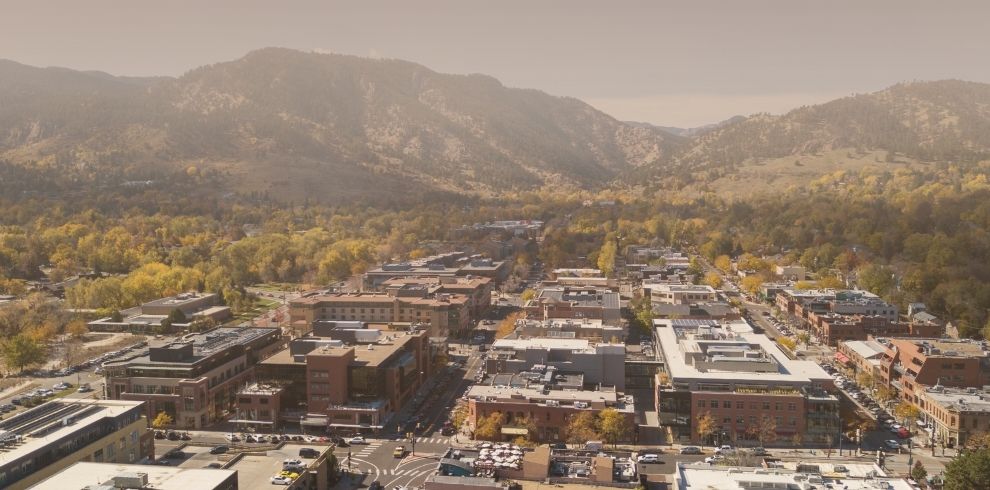
During the height of summer, Coloradans are no strangers to poor air quality. While the haze might look unsightly, where does this haze come from and what makes it so bad to breathe? We consulted local experts and pulmonologist Alyssa Self, MD of Boulder Community Health’s Boulder Valley Pulmonology for a better understanding of what you need to know and how to stay healthy outside.
Where is the wildfire smoke coming from?
Wildfires are becoming an increasing source of haze each year as smoke blows downwind. The fires that affect Colorado are often burning to the west and northwest, in places like California, Oregon, Washington and Canada, as well as Idaho, Utah and western Colorado.
In certain conditions, the smoke can travel thousands of miles across the United States.
What is in the wildfire smoke haze, and how do we know?
According to the Environmental Protection Agency (EPA), wildfire smoke is a complex mixture of pollutants including gases, organic compounds, volatile organic compounds (VOCs) and particulate matter (PM), including soot.
Atmospheric scientists at universities and local organizations like Boulder’s National Center for Atmospheric Research (NCAR), funded by the National Science Foundation (NSF) have conducted many field and chamber simulation studies to better understand the science behind wildfire smoke.
In one such study in 2018, led by NCAR in collaboration with Colorado State University and other academic institutions, atmospheric scientists studied wildfire emissions across the western United States. During flights on NCAR’s c-130 airplane, wildfire plumes were sampled to better understand the composition of wildfire smoke depending on what is burning and how it behaves as it travels downwind.
Thanks to studies like this, scientists are understanding more about how wildfires affect air quality and the health risks for residents in impacted areas.
With many changing variables such as wind direction and the number of wildfires burning to the west, downwind air quality can be difficult to predict ahead of time, so it’s important to monitor air quality regularly.
Why is breathing wildfire smoke bad for your health?
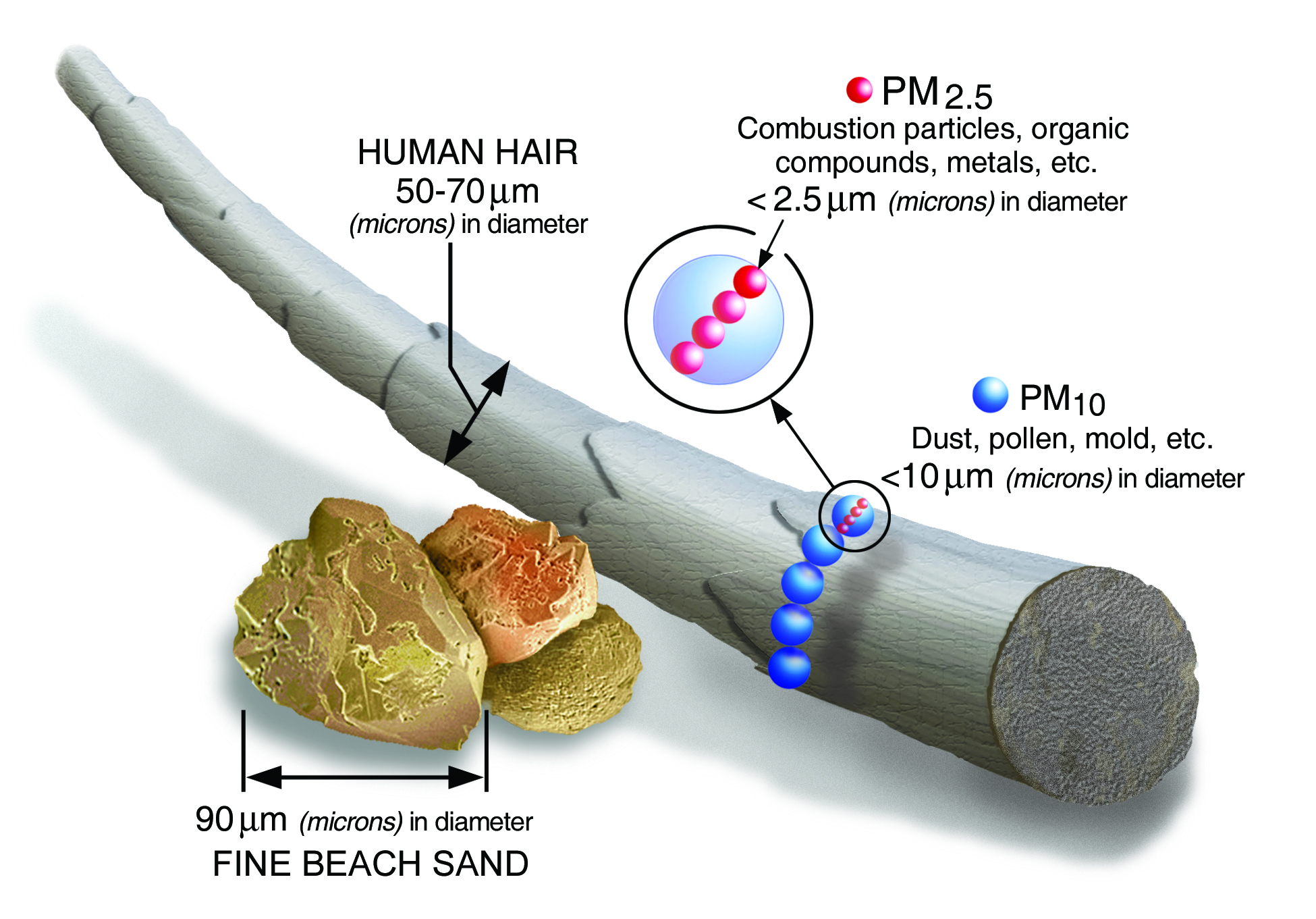
The component of wildfire smoke that is most concerning for health is particulate matter, specifically microscopic particles with a diameter less than or equal to 2.5 microns, called PM2.5. In comparison, a red blood cell has a diameter of about eight microns.
When inhaled, PM2.5 can travel deep into the lungs and easily pass through human tissues and into the bloodstream, impacting morbidity and mortality.
What are some of the potential health impacts of breathing PM2.5?
According to the EPA, there are three main ways inhaling PM2.5 can negatively impact your health: inflammation, disruption of the nervous system (how your body regulates involuntary functions like heart rate and blood pressure), and absorption into the bloodstream.
Inhaling PM2.5 can lead to persistent coughing, phlegm, wheezing and difficulty breathing, with health impacts ranging from minor eye and respiratory irritation to more severe exacerbation of conditions such as asthma and heart failure. There is also early evidence that short-term wildfire smoke exposure may lead to preterm birth in pregnant women.
Exposure to PM2.5 may also make it harder for the body to get rid of other harmful things we inhale, such as viruses or bacteria.
In addition to physical health impacts for individuals with pre-existing conditions, brain function and mental health can also be negatively impacted. Studies have shown an association between wildfire smoke and sleep disruption, feelings of hopelessness, frustration, isolation, loneliness, anxiety and more.
What can we do to stay healthy when its hazy?
All the information available about the dangers of breathing wildfire smoke haze can be overwhelming, but there are things we can do to prevent or limit exposure and stay safe. Dr. Alyssa Self of Boulder Valley Pulmonology at Boulder Community Health provides some tips to use during the summer months of wildfire season.
- Monitor the Air Quality Index (AQI).
Air Quality Index is a measure of the amount of PM2.5 in the air. This number can be found on any smartphone weather app or air quality monitoring websites like AirNow or IQAir.
Look for the following ranges to determine what actions to take on hazy days:
- AQI 51-100: Very sensitive people should decrease the duration or intensity of outdoor activities, though healthy people should have no issues outside.
- AQI 101-150: Patients with lung disease are classified as being in a sensitive group and should reduce prolonged or heavy outdoor exertion.
- AQI 151-200: Sensitive groups should avoid long or intense outdoor activities, and everyone should reduce outdoor activities.
- AQI >200: The air is very unhealthy. Patients with lung disease should avoid all outdoor physical activity, while everyone else should consider moving activities indoors. - Close doors and windows on poor air quality days.
- Use of portable HEPA filters indoors can improve air quality. Many options are available online or in stores.
- Use central air conditioning, if possible, to cool your home. If window air conditioning units are in use, set the device to recirculate indoor air.
- If masking is desired, use an N95 rather than paper or cloth masks.
How do you know if you’re in a sensitive group?
If you have been diagnosed with a cardiopulmonary condition, you may already be aware that you are in a sensitive group for poor air quality. If you are not sure, here is a list of high-risk groups according to the Environmental Protection Agency (EPA):
- People with the following cardiopulmonary conditions:
- Heart disease including heart failure and coronary artery disease
- Lung disease including asthma and chronic obstructive pulmonary disease (COPD)
- Children and teenagers aged 18 and under as their lungs are still developing
- Older adults
- Pregnant women
- Minority populations
- People who work outdoors
It can be disheartening to lose time outdoors to wildfire smoke, but the risks of breathing PM2.5 are too great to disregard. With these helpful tips, you can steer clear of poor air quality and keep yourself well so when the haze passes, you can get outside without worrying.
If you are not certain if you are part of a sensitive group or want to learn more about how inhaling wildfire smoke may be impacting your health, contact your Primary Care Provider to schedule a consultation.