The future of vascular surgery at BCH: Introducing Drs. Hoehn & Pan
- Category: General, Emergency & Trauma, Surgery
- Posted On:
- Written By: Boulder Community Health
Vascular surgery is a lesser-known surgical subspecialty, but it’s a critical field of medicine. These surgeons treat the entire vascular (or circulatory) system: a 60,000-mile network of vessels (arteries, veins and capillaries) which carry blood away from the heart to the body and then from the body back into the heart.
Whether in the operating room or through medical management, vascular surgeons work with their patients to ultimately prevent stroke, blood vessel rupture or limb loss and improve quality of life. They can see patients for a wide variety of issues – such as narrowing in blood vessels (like in the neck or legs); removing plaque (fat/cholesterol) from the carotid artery walls of the neck; weakened, enlarged blood vessels (aneurysms); non-healing wounds in the feet; discomfort or swelling from varicose veins; dialysis access and more.
Vascular surgeons often are consulted during emergencies or traumas concerning the circulatory and blood vessel systems, to reconstruct a blood supply or save a patient’s limb.
Similar to many other surgical specialties, vascular surgery is changing due to advancements in endovascular technologies and minimally invasive techniques – like balloons, needles and catheters, stents and stent-grafts.
These types of percutaneous procedures (through the skin rather than through an incision) are incredibly beneficial to patients – not only for less pain and a quicker recovery, but because they give the surgeon more advanced imaging options and technologies to approach disease.
Expertise and commitment to a range of treatment possibilities
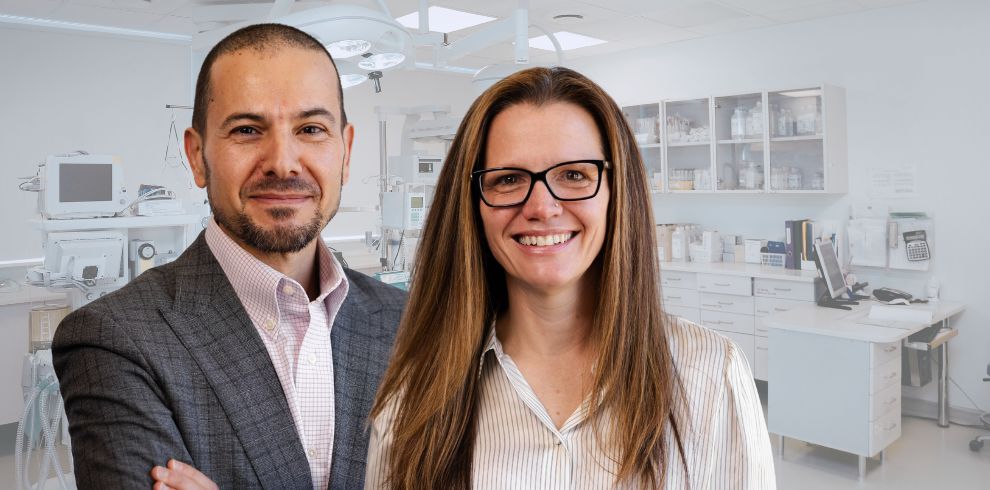
To better serve the entire Boulder Valley community and expand our surgical options, Boulder Community Health (BCH) is proud to introduce our new team of vascular surgeons: Melanie Hoehn, MD and Pantelis Hadjizacharia, MD, RPVI, FSVS, FACS – or “Dr. Pan” as he’s known to colleagues and patients.
Drs. Hoehn and Pan currently take appointments through Boulder Valley Surgical Associates (BVSA) and work on-call at BCH’s Foothills Hospital.
Each surgeon brings:
- A decade or more of operating room skills to their consultations with patients and families
- Ongoing knowledge of the latest surgical techniques
- Commitment to offering the safest, most modern and most effective treatments for all forms of vascular disease
- Extensive training in minimally invasive endovascular procedures and traditional open vascular surgical methods, allowing customized therapies to best suit each patient’s needs.
- A reputation for taking the time to listen, explain conditions clearly, and partner with patients and their families in care decisions.
Vascular disease conditions and treatment options available at Boulder Valley Surgical Associates:
- Arterial diseases, including aneurysms, blocked arteries and carotid artery disease
- Carotid endarterectomy
- Complex peripheral interventions
- Dialysis access/fistulas
- FEVAR/branched endografts
- Limb-salvage techniques
- Pulmonary embolism
- TCAR for carotid artery disease
- Thoracic and thoracoabdominal endovascular repair
- Venous disease, including varicose veins, CVI and DVT
- Venous thrombosis
Get to know our vascular surgeons: Dr. Hoehn & Dr. Pan
 “Dr. Pan,” Pantelis Hadjizacharia, MD, RPVI, FSVS, FACS
Board-certified vascular surgeon, with fellowship-training
- Affiliations:
- Fellow, American College of Surgeons
- Fellow, Society for Vascular Surgery
- Society for Vascular Ultrasound
- Prior to BVSA: Most recently served as a full-time vascular surgeon for 10 years at UCHealth Parkview Medical Center in Pueblo, Colorado. Dr. Pan has authored more than 40 peer-reviewed publications and book chapters, has presented widely at national and international surgical meetings, and has participated as a co-investigator on National Institutes of Health (NIH)-funded research.
- Specialties: Dr. Pan’s clinical vascular expertise includes complex arterial and venous diseases, aortic pathology, and advanced endovascular interventions. He is also certified to interpret vascular ultrasound studies with Registered Physician in Vascular Interpretation (RPVI) certification.
- Philosophy of care: “I take a holistic approach to patients, including them in the decision-making, respecting their autonomy, building trust,” says Dr. Pan. “I tailor approaches based on the patient, what they would prefer and what the patient can tolerate. I think it creates a better outcome for patients.”
- Personal interests and hobbies: Outside of work, Dr. Pan enjoys baking at home, spending time with family, gardening, and getting outdoors or going hiking.
- Keeping up with trends: “Keeping up on the trends and changes and technological advances in vascular surgery, it’s a commitment – which I enjoy,” says Dr. Pan. Keeping up with my skills, especially the changes that are occurring with endovascular techniques, allows me to provide the latest technology, better approaches for patient care.”
- Favorite part about patient care: “In vascular surgery, management of the patient is lifelong. It’s almost like a marriage. You develop this life-long relationship, and you’re their surgeon for the rest of their lives or your life. I think that relationship is key,” says Dr. Pan.
 Melanie Hoehn, MD
Board-certified vascular surgeon, with fellowship-training
- Prior to BVSA: Dr. Hoehn most recently served as a vascular, trauma and surgical critical care surgeon with UCHealth Medical Group in Loveland, Colorado, where she established a comprehensive vascular surgery practice and provided trauma and critical care services at a Level I trauma center. She practiced at Denver Health and Hospital Authority, where she provided elective and emergent vascular surgery care, served as an acute care surgeon, founded an endovascular operating room program to improve care for critically ill patients, and held the role of Medical Director of the Vascular Laboratory. In Maryland, Dr. Hoehn helped develop and implement REBOA protocols and the Basic Endovascular Skills for Trauma (BEST) course, later adopted by the American College of Surgeons.
- Specialties: Treating aneurysms, blocked arteries, carotid artery disease, circulation issues in the legs, and vein problems.
- Philosophy of care: “One of the most interesting things about vascular surgery as a specialty is the chance to approach every patient individually. Vascular disease can be managed with different approaches, so there’s a great deal of patient education involved and really personalizing the treatment plan for the specific patient,” says Dr. Hoehn.
- Personal interests and hobbies: Like many people in Colorado, Dr. Hoehn likes to enjoy the beautiful outdoors. “Basically, any excuse I can use to get outside: hiking, biking, camping, backpacking,” she says.
- On determining if a patient needs surgery: “The way that I decide if a patient is a candidate for a surgical option depends heavily on their presenting pathology,” says Dr. Hoehn. “Intervention can be strongly recommended for certain findings and certain disease processes. A lot of times with vascular surgery, there are other options short of interventions such as medical management or exercise programs. These are important aspects of caring for a patient’s vascular system overall and these are things I discuss in detail with my patients.”
- Favorite part of patient care: “One of the great things about vascular surgery is getting to individualize treatments. You get to know the patient a bit, you get to understand what their personal values are, what their priorities are, and this helps to guide us to what might be the most important approach for them,” says Dr. Hoehn.
Meeting with a vascular surgeon
Vascular conditions become more common with age, but can also often affect patients with:
- A family history of vascular and heart disease
- Pregnancy
- A cardiac-related condition, such as high cholesterol or high blood pressure.
- Obesity or a sedentary lifestyle
- A history of smoking or who currently smoke
If you’re concerned about a vascular condition, such as further evaluation for a foot ulcer, an aneurysm from smoking or carotid artery disease, make an appointment with your primary care provider (PCP) first. Your PCP will order any necessary imaging and consult with you about a referral to Drs. Hoehn and Pan.
For patients who are experiencing leg swelling, varicose veins or dialysis access, BVSA is here to help with self-referrals.
“A patient might experience symptoms that prompt them to question seeing a vascular specialist,” says Dr. Hoehn. “Most common are problems related to the leg, what most people would cite as circulatory problems: pain, discomfort, or any prominent/abnormal vessels that you can see. Additionally, chronic wounds that don’t heal.”
For additional questions, contact Boulder Valley Surgical Associates (BVSA) at 303-415-4599.