How noninvasive structural heart and valve procedures are transforming cardiac care
- Category: General, Cardiology
- Posted On:
- Written By: Boulder Community Health
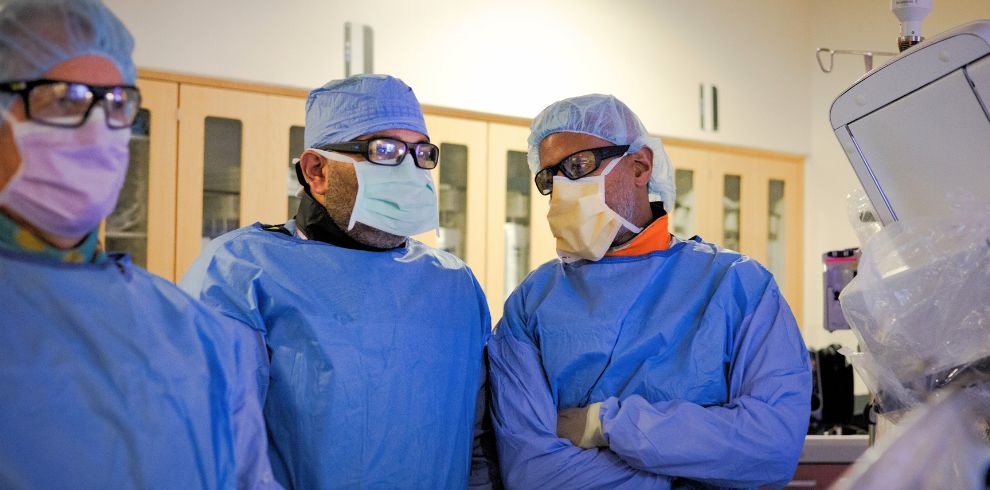
Dr. Srinivas Iyengar’s patients are motivated to stay healthy — it’s important to them to outrun, outhike and outbike their neighbors, friends and family members. And when it comes to their health, they’re competitive about that, too.
One area of their health in which patients have little control is their genetics. Healthcare today is trending more towards minimally invasive robotic techniques and surgeries, noninvasive procedures and early intervention — a blessing for any cardiology patient who starts taking cholesterol lowering statins or blood pressure medications in their 40s, develops clogged arteries, experiences aortic stenosis or can’t withstand the use of blood thinners.
As technology evolves for cardiovascular disease, the need for interventional cardiologists — specialists who diagnose and treat heart and blood vessel conditions using minimally-invasive, catheter-based procedures instead of traditional open-heart surgery — has increased.
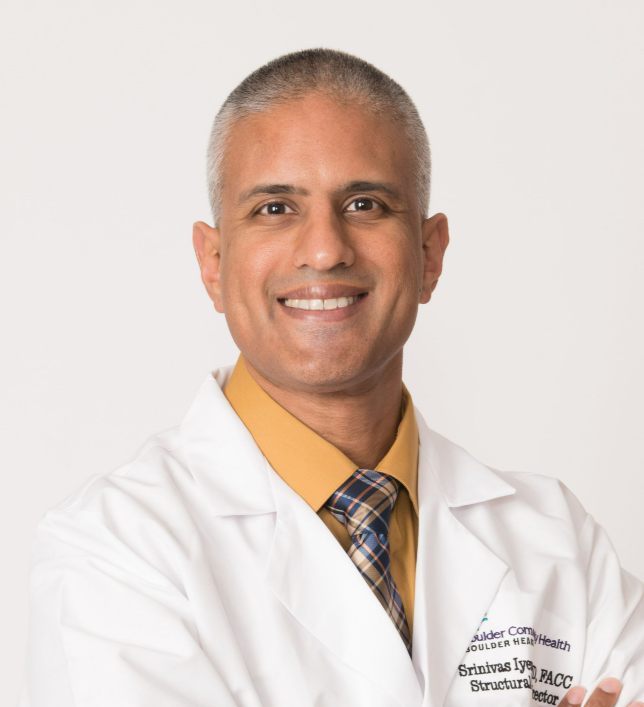 Boulder Heart’s Structural Heart & Valve Program is led by its Director - Srinivas Iyengar, MD - who joined Boulder Community Health’s Boulder Heart in 2017, following a two-year advanced interventional cardiology fellowship at Columbia University and eight years in Florida. There he created and directed two separate TAVR programs, as well as spearheaded the Mitra clip and WATCHMAN LAA occlusion programs in his respective hospitals.
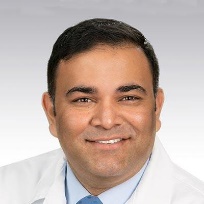 Chirag Chauhan, MD, who joined Boulder Heart earlier this year, is BCH’s newest interventional cardiologist. With more than two decades of experience, Dr. Chauhan is board-certified in Internal Medicine, Cardiovascular Diseases, Echocardiography, and Interventional Cardiology. He is also a Fellow of both the American College of Cardiology (FACC) and the Society for Cardiovascular Angiography and Interventions (FSCAI). Center in Denver. He most recently served as a Structural Interventional Cardiologist at Aurora Denver Cardiology Associates.
“With new technologies available on a regular basis, physicians and cardiologists have the tools to take care of patients like never before,” says Dr. Chauhan. “It is, however, incredibly important to not forget about the most important principle of all: the doctor/patient relationship.”
Drs. Iyengar and Chauhan …
- Represent the most experienced Structural Heart & Valve team in the northern Front Range, performing transcatheter aortic valve repair (TAVR), WATCHMAN, MitraClip ® therapy and Patent Foramen Ovale (PFO).
- Offer the latest technologies at Foothills Hospital’s Cardiac Catheterization Lab, including the Medtronic Evolut™ FX+ transcatheter aortic valve replacement (TAVR) system, WATCHMAN FLX Pro™ Device with sizes for all anatomies, and the WATCHMAN TruSteer™ Access System. Foothills Hospital is the only facility in Boulder County offering TAVR and WATCHMAN.
- Are fellowship-trained:
- Dr. Iyengar at New York-Presbyterian Hospital/Columbia University, the first site to pioneer Transcatheter Aortic Valve Replacement (TAVR) in 2007.
- Dr. Chauhan at Cedars Sinai Medicine Center and University of Pittsburgh Medical Center.
- Are peer-reviewed authors and active structural heart speakers at national academic conferences.
Minimally invasive procedures for heart valve disease
When a diseased valve begins to affect the heart’s ability to pump blood efficiently or in the right direction, that’s when Drs. Iyengar and Chauhan work swiftly to prevent complications. Each interventionalist, along with his patients, prepare action plans to fight against congestive heart failure, atrial fibrillation (AFIB) and pulmonary hypertension.
The best option to avoid progressive symptoms and ensure the best quality of life is a valve repair or replacement to address regurgitation (when a valve doesn’t fully close and allows blood to leak backwards) and stenosis (narrowing of a valve that prevents blood flow).
As experienced interventional cardiologists, both Dr. Iyengar and Dr. Chauhan perform:
Transcatheter Aortic Valve Replacement (TAVR): A minimally invasive, catheter-delivered, FDA-approved procedure to replace damaged aortic valves to boost blood flow, allowing patients to enjoy longer lives and a return to favorite activities. TAVR is available for patients diagnosed with severe aortic stenosis (narrowing of the aortic valve) who are younger and active, as well as those whose age or physical condition disqualify them from having open heart surgery. In June 2024, BCH treated its first patient using the Evolut™ FX+ transcatheter aortic valve replacement (TAVR) system. Foothills Hospital was the first facility in Colorado (full market release) and a four-state region to offer this latest technology to treat symptomatic severe aortic stenosis (ssAS) for patients across all risk categories (extreme, high, intermediate and low).
WATCHMAN: This FDA-approved implant effectively reduces stroke risk in people with atrial fibrillation (AFib) that’s not caused by a heart valve problem. A one-time, minimally invasive procedure, WATCHMAN is a permanent implant that closes off the left atrial appendage, where most stroke-causing blood clots form. The Boulder Heart team is proud to offer patients the latest in WATCHMAN technology — the WATCHMAN FLX Pro™ Device, a next-generation, updated design with three new features to advance performance and safety and ensure the best long-term outcomes.
In addition, BCH's Foothills Hospital in Feb. 2024 was the first hospital in Colorado (full market release) to offer patients WATCHMAN FLX Pro™. BCH also utilizes the WATCHMAN TruSteer™ Access System — a complement to the WATCHMAN FLX Pro™ — which supports steering and a greater range of motion to position the WATCHMAN implant for more complicated anatomies.
By 2030, it’s estimated that 9 to 12 million people will have AFib. By 2050, that number is expected to rise to 16 million.
MitraClip® Therapy: Works in conjunction with TMVr, which is a minimally invasive procedure used when a patient is too sick or has another medical condition prohibiting them from undergoing traditional mitral valve surgery. This procedure doesn’t require opening the chest or stopping the heart during treatment, making it a safer alternative to open heart surgery for these patients.
PFO/ASD Closure: Approximately 20 percent of people have an opening between the two upper chambers of the heart that never closed at birth. This is called a “patent foramen ovale” or “PFO.” There can also be a larger opening known as an “Atrial Septal Defect” or “ASD.” In rare cases, these openings can result in stroke. These openings can be permanently closed, non-surgically, with a PFO closure device.
Make an appointment today
Read more about BCH's Structural Heart & Valve program here. To find out if a structural heart procedure is right for you, schedule a consultation with Dr. Iyengar or Dr. Chauhan by calling 303-442-2395.
Drs. Iyengar and Chauhan’s patients are also cared for by Katie Adkins, RN — Structural Heart Clinic Coordinator — as she guides them and their families through initial referral to postoperative care. The process can feel complex. Her goal is to decrease, and if possible, eliminate much of the stress and confusion that may arise with a cardiac care journey. "I love to see the outcome of improved quality of life for patients," Adkins says. "I really enjoy being a resource for patients and the calm in the chaos, as they are going through a health issue that can be overwhelming and scary at times."