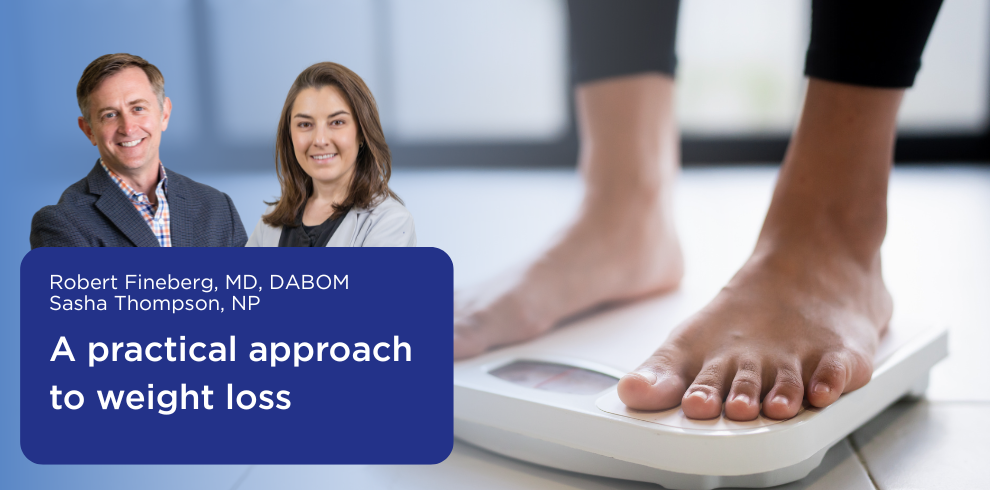
Dr. Robert Fineberg and Sasha Thompson, NP on a practical approach to weight loss
- Category: General, Primary Care
- Posted On:
- Written By: Boulder Community Health
A practical, personalized approach to weight loss
Obesity isn’t a personal failure — it’s a complex, chronic disease involving genetics, hormones, behavior and environment. At Boulder Community Health, Robert Fineberg, MD, DABOM, and Sasha Thompson, NP, are reshaping the conversation about weight loss through a practice designed around science, support and sustainability.
Whether you’ve struggled with weight for years or are just beginning your health journey, their approach centers you — your history, your goals and your long-term well-being.
Obesity: A widespread and serious health issue
According to the Centers for Disease Control and Prevention (CDC), more than 40% of U.S. adults live with obesity. Severe obesity affects nearly 1 in 10 adults, and rates are climbing — especially among children and young adults.
This isn’t just about weight — obesity is linked to serious health conditions including:
Type 2 diabetes
Heart disease and stroke
Certain cancers
Sleep apnea and chronic fatigue
Depression and anxiety
Joint pain and arthritis
Early, compassionate intervention can reduce long-term health risks and improve quality of life. “Obesity really does impact almost, if not every organ system in our body,” said Dr. Fineberg. “Reducing weight — even as little as five to ten percent — can dramatically reduce risks associated with hypertension, diabetes and other diseases.”
An evidence-based, whole-person approach
BCH does not offer fad diets or extreme programs. Instead, Dr. Fineberg and Thompson provide medical guidance, goal setting and behavioral support grounded in current research and clinical best practices.
Here’s what you can expect as a patient:
A 60-minute intake visit to explore your medical history, lifestyle and personal goals.
Monthly 20-minute follow-ups for accountability, medication management and new goal setting.
Access to nutrition support from a registered dietitian.
Medication review to identify drugs that may contribute to weight gain and explore safe alternatives.
Screenings for sleep apnea, anxiety, depression and binge eating.
Referrals for specialty care including bariatric surgery, physical therapy or behavioral health.
“This is a team approach,” said Thompson. “Our goal is to create a plan that works for you long term — and can evolve with you.”
This comprehensive care model is designed to treat obesity for what it is — a multifactorial condition that requires multifaceted support.
Treating the whole person: Sleep, stress and behavior
“We address all of the contributing factors — biological, behavioral, emotional, and social,” said Thompson. “And our goal is to look at the long-term health picture, not just your short-term number changes.”
Sleep and obesity are tightly linked. Poor sleep disrupts hunger hormones, increases insulin resistance and contributes to fatigue and inactivity. The clinic regularly screens for sleep apnea and discusses sleep hygiene strategies with patients.
Mental health is also critical. Conditions like anxiety, depression and binge eating disorder can influence eating patterns, motivation and movement. The clinic uses standardized assessments (PHQ-9, GAD-7, BEDS-7) to identify needs and connect patients with support.
Behavior change is at the heart of the clinic’s process. Patients set specific, realistic goals each month — like preparing regular meals or increasing daily steps — and are encouraged to track both scale and non-scale victories, such as:
Improved energy
Better sleep
Mood and confidence boosts
Looser-fitting clothes
Reduced medication needs
Medications: A useful tool, not a magic solution
When appropriate, medications can be prescribed to support weight loss. These may include:
GLP-1 receptor agonists (semaglutide, tirzepatide)
Metformin
Bupropion/naltrexone
Phentermine/topiramate
“These are tools we add to your tool belt when we need them — and when they're appropriate and safe, of course,” said Thompson.
Medications are chosen based on medical history, insurance coverage and patient preference — and are always part of a larger treatment plan that includes nutrition and lifestyle support.
In some cases, the clinic works with other providers to deprescribe medications that promote weight gain, such as insulin, SSRIs, antipsychotics and beta blockers.
Nutrition and physical activity: Simple, sustainable strategies
The clinic emphasizes incremental, individualized nutrition — not calorie obsession or strict plans. Patients are encouraged to:
Eat regular meals to avoid extreme hunger
Choose whole foods with plenty of fiber and protein
Limit processed snacks and sugary drinks
Practice mindful eating
“If we focus on adding things — adding fiber, adding protein — our brain generally responds really positively to that,” said Thompson. “This is not about taking joy out of food.”
Physical activity is also addressed with a flexible, judgment-free mindset. The clinic encourages:
Starting where you are to prevent injury
Aiming for 150 minutes of weekly movement
Including resistance training for muscle mass and metabolism
Addressing physical limitations through physical therapy when needed
“Our bodies were literally made to move,” Thompson said. “Mental and physical health depend on it.”
Results that last — and support every step of the way
To date, the clinic has helped more than 680 patients lose a combined 6,794 pounds — including one patient who lost 159 pounds and another who lost 43% of their total body weight.
“But we try to celebrate the other things, too,” said Thompson. “Like improved energy, better mood, confidence — being a good example to your family. Those are wins.”
Take the next step — we’ll meet you where you are
If you’re ready to make meaningful changes, Boulder Community Health’s weight loss clinic is here to support you with science, compassion and a plan that works for your life.
“The conversation in society is changing,” said Thompson. “It can still be scary to start — but you deserve support when you're ready. And we’re here for you.”
The clinic sees both adults and children and can evaluate what step is the best next step.
Watch the full lecture below to learn more.