Are you ready? Recognizing and acting fast can save a life during these health events
- Category: General, Cardiology, Emergency & Trauma
- Posted On:
- Written By: Boulder Community Health
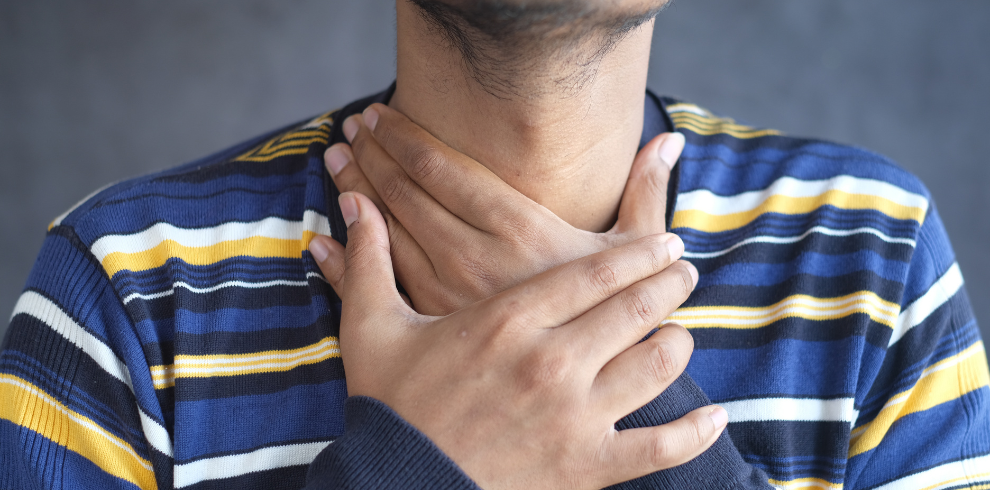
With the holidays upon us, many families and friends gather to share meals, exchange gifts and spend quality time together. With so much excitement and activity, health events are more common this time of year. Stroke, choking and heart attack are three events where quick action can save lives – read on to recognize the signs and know what to do.
Recognizing a stroke and acting with BEFAST
In the event of a stroke, every second counts and recognizing the signs early can make all the difference in treatment and recovery. One of the most effective ways to identify a stroke is by using the BEFAST method. This simple acronym can help anyone spot the common signs of a stroke, even if they have no prior medical training.
A stroke happens when a blood vessel to a part of the brain becomes clogged or bursts. When this occurs, the nerve cells in that part of the brain can no longer work properly. Every part of the brain controls a specific part of the body. The part of the brain that is affected by the blockage or bleeding will determine what deficits appear (for example, trouble speaking, walking or numbness and weakness).
Use the acronym B.E.F.A.S.T. for recognizing a stroke:
B - Balance: Watch for sudden loss of balance or coordination
E - Eyes: Check for vision loss, blurred or double vision
F - Face: Look for an uneven smile
A - Arm: Check if one arm is weak
S - Speech: Listen for slurred speech
T - Time: Call 9-1-1 immediately
Read more about identifying a stroke and the increased risks of stroke for women and patients with Atrial Fibrillation (AFib) here.
How to recognize when someone is choking and what to do
Choking is most common in children, but anyone at any age can choke. Recognizing the signs and acting quickly can save lives. Key risk factors include talking or laughing with a mouth full of food, eating too much in one bite or eating too fast. Certain neurological or physical medical conditions, as well as dental problems or use of dentures can also increase a person’s risk of choking.
Watch for these symptoms:
- Holding the throat with one or both hands
- Panicked, confused or surprised facial expression
- Unable to cough, or weak cough
- Unable to speak or cry
- High pitched squeaking sounds, or no sound
- Pale or blue skin color
If someone around you is choking, give 5 back blows. If there is no improvement, you may give abdominal thrusts, also known as the Heimlich maneuver.
Performing the Heimlich maneuver:
- With the person standing, move behind the choking person and bend your knees slightly
- Make a fist with one hand, and place your other hand around the fist
- Wrap your arms around the choking person, placing your linked hands just underneath their breastbone
- Using force, give 5 abdominal thrusts pulling inward and upward
- Continue giving 5 back blows and 5 abdominal thrusts until the person can cough, cry, speak, or becomes unresponsive
- If the person becomes unresponsive, begin CPR and call 9-1-1 immediately.
Read more from the American Red Cross about how to recognize when someone is choking, and watch the video on what to do when it’s time to act here.
Recognizing a heart attack: Do women and men have different symptoms?
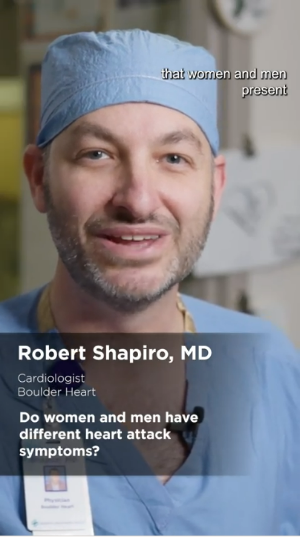 While there are many symptoms that may be associated with a heart attack, women and men may show different signs.
Women can have nonspecific symptoms like fatigue of lightheadedness or shortness of breath.
Men commonly have chest pain, sweating, nausea and vomiting.
Other common symptoms include chest tightness or pressure, dizziness, uneasiness, trouble sleeping, and jaw, neck or arm pain. The key is to trust your instincts – your body will tell you if there is something wrong. If you feel like something is wrong, take it very seriously.
If you suspect someone around you is having a heart attack, call 9-1-1 immediately.
Hear more from Robert Shapiro, MD, cardiologist at Boulder Heart on how women and men can experience different symptoms of heart attack here.